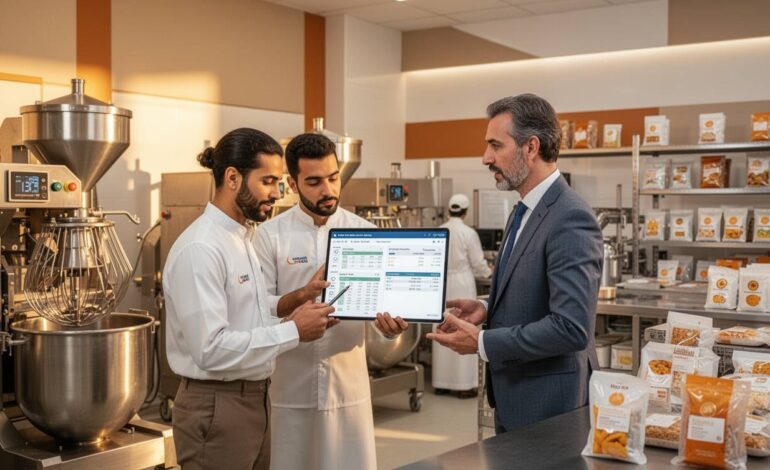
Co-Manufacturing vs In-House: Decoding the Best Path for UAE Food Ventures
Imagine a Dubai cloud kitchen operator racing against time to launch a new line of ready-to-eat meals amid booming food industry trends. Should they invest millions in their own facility or partner with a co-manufacturing expert? This decision shapes food business growth in the competitive food and beverage industry.
Understanding Co-Manufacturing and In-House Production in the UAE Context
Co-manufacturing, often called contract manufacturing, involves partnering with specialized external facilities to produce your food products. This approach leverages established infrastructure and expertise without the need for your own production setup. In contrast, in-house production means building and operating your own factory, giving you full ownership over every step from mixing to packaging.
In the UAE, where the food and beverage sector is projected to grow at a CAGR of 7.2% through 2028 according to a FoodNavigator report, these models carry unique implications. Rapid urbanization and tourism drive demand for innovative products like healthy snacks and ethnic cuisines, pushing operators to choose wisely between flexibility and control.
Key Advantages of Co-Manufacturing for Emerging Food Brands
For startups in the cloud kitchen business, co-manufacturing shines by slashing upfront costs. You avoid the hefty capital expenditure on machinery and real estate, which can run into millions for a mid-sized operation. Instead, pay per batch, aligning expenses with sales – a variable cost structure that keeps cash flow healthy during early food business growth phases.
Speed to market is another edge. A Mumbai-inspired shawarma brand expanding to Abu Dhabi could ramp up production in weeks via co-manufacturing, tapping into proven workflows and skilled labor. This is crucial in fast-paced food industry trends where delays mean lost opportunities in QSR and delivery segments.
Access to Expertise and Scalability
Co-manufacturers bring deep knowledge in food safety and compliance with UAE standards from bodies like the Emirates Authority for Standardization and Metrology (ESMA). They handle certifications, reducing your regulatory burden. Scaling is seamless too – ramp up for Ramadan peaks or dial back post-holidays without idle assets.
The Strengths of In-House Production for Established Players
Once your brand stabilizes, in-house production offers unmatched control. Picture a sustainable food brands pioneer in Sharjah perfecting a plant-based hummus recipe. Owning the process ensures exact specifications, fostering innovation through tight R&D-manufacturing loops.
Long-term, per-unit costs drop at high volumes, building margins for reinvestment. Industries like automotive use this for supply chain mastery, and UAE food factories follow suit for premium lines where quality trumps speed. A recent IFT study notes that in-house setups cut costs by up to 25% after scale-up, vital for restaurant consulting clients eyeing expansion.
IP Protection and Customization
In-house shields proprietary recipes, a boon for food technology innovators crafting unique flavors. Quick adjustments for market shifts or troubleshooting enhance responsiveness, unlike co-manufacturing’s potential delays from partner schedules.
Cost Breakdown: Variable vs Fixed Expenses
Co-manufacturing favors variable costs – pay only for output, ideal for testing food product ideas. In-house demands fixed investments in equipment and staff, but yields economies at volume. For UAE brands, where 68% of F&B firms cite cost pressures per an EIT Food survey, hybrid models often emerge as winners.
As Food Business Experts advise, calculate your break-even: co-manufacturing suits under 50,000 units annually, flipping to in-house beyond that threshold. Factor in UAE’s rising energy costs and labor visas for accurate modeling.
Risks and Mitigation Strategies in Each Model
Co-manufacturing risks include dependency on partners’ reliability, potentially impacting delivery. Select Turnkey Food Factory Consultants vetted for track records. In-house exposes you to full compliance risks, demanding robust food safety systems.
Quality dips in co-setups if oversight lapses, while in-house strains with skill gaps. David Acheson, former FDA associate commissioner, notes: Food brands thrive by matching production models to maturity stages, avoiding overreach in either direction. This rings true for UAE’s stringent import rules.
Practical Recommendations for UAE Food Entrepreneurs
To choose wisely, consider these actionable steps tailored for the food and beverage industry:
- Conduct a scalability audit: Project volumes for 3 years using restaurant consulting tools to see if co-manufacturing’s flexibility fits your cloud kitchen business trajectory.
- Partner with food factory design consultants early: They bridge models, like advising on in-house pilots via co-manufacturers for proof-of-concept.
- Prioritize food processing consultancy services: Ensure partners or your setup meet ESMA and HACCP standards, safeguarding sustainable food brands reputation.
Case Studies: Real-World Wins in UAE and Beyond
A Dubai qsr consultants client, a falafel chain, switched to co-manufacturing post-launch. They hit 200% growth in year one, crediting food processing plant consultancy Services for seamless integration. Conversely, a mature bakery in Al Ain built in-house after stabilizing demand, boosting margins via custom food technology.
These stories highlight how Food Consultants guide transitions, blending co-manufacturing for agility with in-house for control in UAE’s dynamic market.
Frequently Asked Questions (FAQs)
What are the main food industry trends influencing co-manufacturing vs in-house decisions in UAE?
UAE food businesses face trends like rising demand for clean-label products and delivery-focused cloud kitchen business models, pushing many toward co-manufacturing for quick scaling. Established players lean in-house for customization amid sustainability pushes. food business consultants recommend hybrids to balance these pressures effectively.
How do food processing consultants help with co-manufacturing partnerships?
Food Processing Consultants vet partners, negotiate contracts, and ensure food safety compliance, saving you headaches. In UAE, they navigate ESMA approvals, turning potential pitfalls into smooth operations for your food business growth.
Is in-house production viable for small cafe startups in Dubai?
For small cafe consultant-guided startups, in-house is rarely viable due to high fixed costs; start with co-manufacturing to test markets. Scale to in-house only after proven demand, as advised by restaurant setup consultants.
What role does food technology play in these models?
Food technology amplifies both: co-manufacturers deploy automation for efficiency, while in-house enables proprietary innovations like AI recipe optimization. food product development consultants integrate tech seamlessly across setups.
Make the Right Call: Propel Your Food Brand Forward
Whether chasing speed with co-manufacturing or control via in-house, align your choice with long-term vision. UAE’s food and beverage industry rewards strategic producers who prioritize food safety and adaptability. Consult experts like Tech4Serve today to audit your setup and unlock next-level growth.