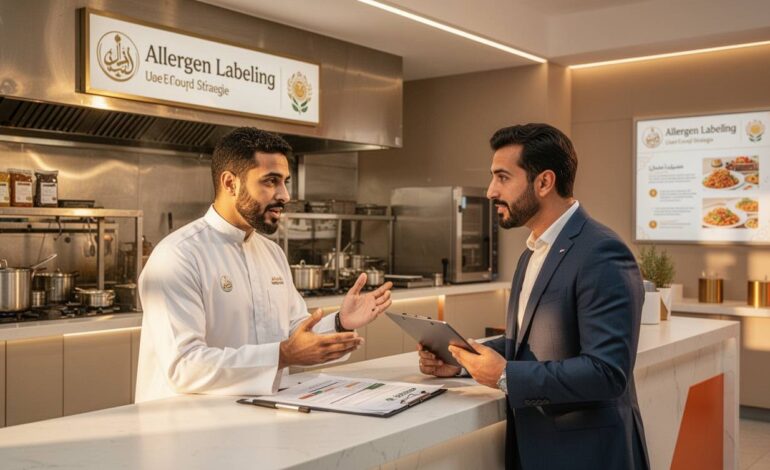
The Rising Importance of Allergen Labeling in the UAE
In the bustling food and beverage industry of the UAE, allergen labeling has become a critical focus for businesses aiming to ensure food safety and consumer trust. As more diners prioritize dietary restrictions, understanding the intricate dance of allergens is indispensable for success.
Why Allergen Labeling Is a Must
In today’s global market, the expectations around complete transparency are sky-high. With recent research by FoodNavigator revealing that 64% of consumers seek comprehensive food labeling, it’s more than just a trend – it’s an imperative. Equally, the prevalence of food allergies is climbing, with one in fourteen children globally being affected, according to the American Dietetic Association.
UAE’s Response to Allergen Concerns
The UAE’s rapid embrace of both regional and international cuisines heightens the need for meticulous allergen labeling. The government encourages businesses to adhere to stringent food safety guidelines, a vital move that food and beverages consultants across the nation applaud.
Practical Strategies for Effective Labeling
Effectively managing allergen risks commands not just adherence to regulations, but also a proactive customer-first approach. Here are three actionable steps:
- Implement a robust training program for your staff on allergen awareness and food technology. Ensuring your team fully understands potential risks can make all the difference.
- Leverage expert advice from food processing consultants who offer insights into designing your labeling system, ensuring compliance with local and international standards.
- Regularly audit your ingredient sourcing and supply chain to prevent cross-contamination, utilizing services from food consultancy services to optimize these processes.
Understanding the Business Impact
Clear allergen labeling isn’t just a responsibility; it’s a business growth enabler. According to food industry consultant Karen Thompson, accurate communication of allergen information enhances consumer loyalty and can significantly boost market share. This sentiment resonates strongly with seasoned food processing plant consultancy practitioners who have witnessed firsthand the protection proper labeling offers to brand reputation.
Case Study: Dubai’s Diverse Dining Landscape
Take, for example, a popular Dubai-based cloud kitchen that faced significant backlash over an allergen mishap. Committed to regaining consumer trust, they collaborated with food and beverages consultants to overhaul their labeling processes, resulting in not only restored reputation but also a doubling of their online customer base within a year.
Potential Pitfalls and How to Avoid Them
Allergen management requires careful attention to avoid pitfalls. Failing to address allergen risks could lead to severe repercussions, from legal challenges to viral social media backlash. It’s crucial to work with qsr consultants who can guide your restaurant’s setup and operations, ensuring you sidestep these dangers.
Frequently Asked Questions (FAQs)
What are some common allergens that must be labeled?
The most prevalent allergens include nuts, seafood, dairy, soy, and gluten. In the UAE, regulations emphasize these allergens due to their potential severe reactions.
How can restaurants in the UAE ensure compliance with allergen labeling?
Engaging with turnkey food factory consultants and food product development consultants can help restaurants maintain compliance by setting up effective allergen management systems. Regular staff training and audits also play a crucial role.
Conclusion
As the UAE food landscape evolves, allergen labeling stands out as a critical component of business strategy. By leveraging insights from expert food consulting services and staying ahead of food industry trends, your business not only protects its patrons but also sets itself up for sustainable growth. Need help in upgrading your allergen labeling practices? Reach out to Tech4Serve and see how you can transform your business today.