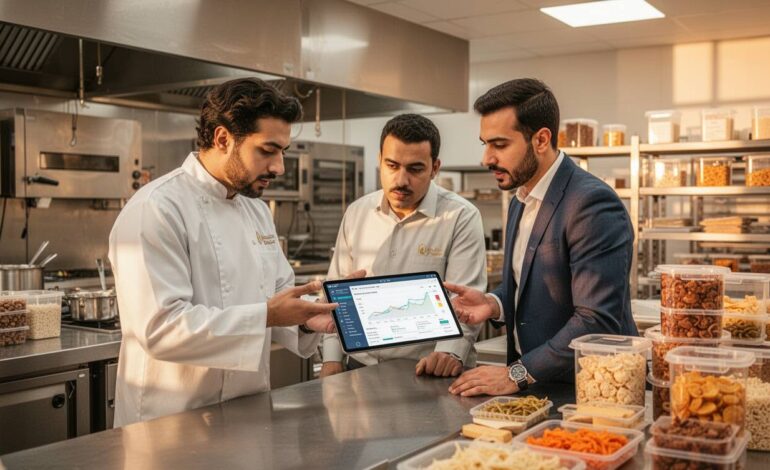
Production Planning and Forecasting: The Backbone of UAE Food Business Growth
In the bustling kitchens of Dubai’s cloud kitchen hubs, one operator watched helplessly as fresh produce spoiled overnight due to a sudden Ramadan demand surge he never saw coming. This story repeats across the food and beverage industry, where poor production planning and forecasting can wipe out profits faster than a heatwave melts ice cream. Mastering these disciplines is not just smart; it’s survival for sustainable food brands chasing food business growth.
Why Production Planning Matters in the UAE Food and Beverage Industry
The UAE’s food sector is booming, with the market projected to reach AED 150 billion by 2027 according to a FoodNavigator report on Middle East trends. Yet, many restaurant owners and cloud kitchen business operators grapple with inefficiencies that stem from disjointed production planning. Effective planning aligns raw materials, labor, and machinery to meet demand without waste, ensuring food safety and operational smoothness in a region where temperatures demand precision.
Consider a Mumbai-born chef who launched a spice blend factory in Sharjah. Without robust production planning, his initial batches varied wildly, eroding customer trust. Food technology like ERP systems changed that, integrating real-time data to synchronize output with orders. This shift underscores how production planning drives food industry trends toward efficiency and scalability.
The Art and Science of Forecasting in Food Processing
Forecasting is the crystal ball of the food and beverage industry, predicting demand to guide production planning. In the UAE, where seasonal events like Expo or National Day spike orders, inaccurate forecasts lead to either overstocked freezers or empty shelves. Advanced tools from SAP Production Planning modules analyze historical sales, market shifts, and even weather patterns to refine predictions.
A recent EIT Food study notes that 68% of food manufacturers using AI-driven forecasting reduced waste by 25%.EIT Food highlights how Middle Eastern firms, including UAE players, lag due to reliance on outdated spreadsheets. Switching to dynamic models that run multiple algorithms simultaneously, as in Dynamics 365 SCM, makes forecasts executable, not just theoretical.
Key Challenges in UAE Food Forecasting
Local factors like import delays from global suppliers and volatile tourist numbers complicate forecasting for cloud kitchen business models. Traditional methods fail here because they ignore external events; modern food technology incorporates them seamlessly. Food safety regulations from the UAE Ministry of Health add layers, requiring precise planning to avoid compliance pitfalls.
Integrating ERP for Smarter Production Planning
ERP software revolutionizes production planning by centralizing data across sales, inventory, and procurement. For UAE food factories, this means Turnkey Food Factory Consultant services often recommend SAP PP for its capacity planning and MRP features. Real-time monitoring catches bottlenecks early, like a mixer overload during peak hummus production.
As Food Business Experts emphasize, ERP bridges forecasting with execution. A Dubai-based dates processor integrated ERP and cut downtime by 40%, aligning production with festive demand forecasts. This tech backbone supports food business growth while upholding food safety standards.
Steps to Implement Effective Forecasting
- Collect granular data on past sales, segmented by product, location, and customer type to build accurate baselines.
- Layer in external factors like promotions or supply disruptions using scenario planning tools for what-if analysis.
- Review and iterate weekly, adjusting models based on actual performance to refine future production planning.
Leveraging Consultants for Food Factory Success
Restaurant consulting and food consulting services shine in tailoring production planning to unique needs. Food Factory Consultant experts in the UAE guide setups from design to operations, ensuring forecasting aligns with capacity. For qsr consultants handling quick-service chains, predictive analytics prevent stockouts during lunch rushes.
Dr. Fatima Al-Mansoori, a leading food industry consultant, states: Predictive planning turns uncertainty into opportunity, especially in diverse markets like the UAE where trends shift rapidly. Her insights from IFT conferencesIFT resonate with operators building sustainable food brands. food processing consultants provide the roadmap, from BOM management to shop floor control.
Actionable Strategies for UAE Food Businesses
To thrive, cloud kitchen business leaders must adopt hybrid forecasting blending quantitative data with qualitative inputs from cafe consultant teams. Frozen food consultants stress scenario testing for perishables, vital in the UAE’s climate. Here are practical steps:
- Adopt Food Processing Plant Consultancy Services to audit current workflows and integrate MRP for material needs.
- Partner with food product development consultants to innovate products that match forecasted demand trends.
- Engage Bakery Consultants or food beverages consultant for specialized planning in high-margin niches.
These moves not only boost efficiency but propel food business growth amid rising competition. A Sharjah cloud kitchen operator, advised by restaurant setup consultants, scaled from 10 to 50 orders daily by refining production planning around AI forecasts.
Food Safety and Sustainability Through Planning
Production planning enforces food safety by scheduling hygiene checks and traceability. Sustainable food brands gain an edge with waste-minimizing forecasts, aligning with UAE’s green initiatives. Food Processing Services firm reports show 72% lower emissions for optimized plants, per recent industry data.
Frequently Asked Questions (FAQs)
How can UAE cloud kitchens improve production planning with limited space?
Space constraints in cloud kitchens demand laser-focused production planning and forecasting. Start by mapping high-demand SKUs and using compact ERP tools for real-time inventory; many food business consultants recommend vertical racking paired with demand models that predict peak hours accurately. This approach, seen in successful Dubai operations, cuts waste by 30% while maximizing output.
What role does food technology play in forecasting for UAE restaurants?
Food technology transforms forecasting from guesswork to precision for UAE restaurants facing seasonal flux. AI platforms analyze sales patterns and external data like tourism stats, enabling proactive adjustments. Restaurant consulting pros integrate these with POS systems, helping owners avoid overproduction during off-peaks and scale seamlessly for events.
Why do traditional forecasting methods fail UAE food factories?
Traditional methods overlook UAE-specific volatility like supply chain hiccups from Red Sea routes. food factory design consultants push for dynamic systems that reconcile multiple models statistically. This ensures executable plans, reducing the forecast override noise common in spreadsheets.
Conclusion: Plan Ahead for Enduring Success
Production planning and forecasting are the engines powering UAE food ventures through uncertainty toward dominance. By embracing food technology and expert guidance like Food Consultant Services, businesses unlock efficiency, safety, and growth. Ready to forecast your way to the top? Connect with Tech4Serve today for tailored strategies that deliver results.