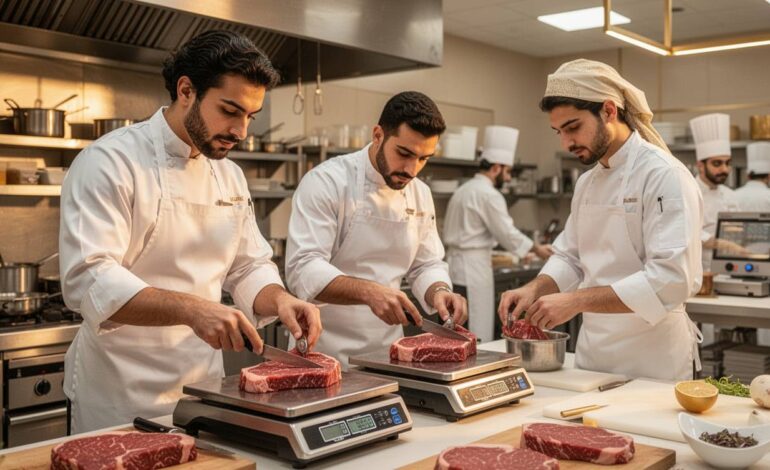
Portion Control: The Silent Profit Killer in UAE Food Businesses
Imagine a bustling Dubai cloud kitchen operator watching profits evaporate as oversized steak portions return half-eaten on plates, straight to the bin. In the UAE’s food and beverage industry, where imported ingredients drive up costs, mastering portion control is not just smart-it’s survival amid soaring food costs and rampant wastage. This article uncovers actionable strategies to reclaim your margins without compromising customer satisfaction.
Why Food Costs and Wastage Are Skyrocketing in the UAE
The UAE’s reliance on food imports, with bills hitting USD 100 billion in 2015 and projected to quadruple by 2025, makes every dirham count in restaurant consulting circles.Posist reports highlight how extreme climates limit local farming, pushing operators to navigate volatile global prices. Add to that the UAE generating 2.7kg of food waste per person daily-according to Dubai Carbon data-and hospitality sectors face AED 6 billion in annual losses from wastage alone, as per NEMA’s national action plan.NEMA insights underscore the urgency for food business growth through precise controls.
Portion Control as the First Line of Defense
Portion control defines exact quantities for dish preparation and serving, ensuring consistency in taste and quality. In a competitive landscape, it directly tackles food cost by curbing overuse of premium ingredients like imported meats or seafood. For cloud kitchen businesses, where delivery packaging amplifies waste, standardizing portions via food technology tools prevents the common pitfall of overserving, aligning with food industry trends toward efficiency.
Real-World Impact: Stories from UAE F&B Operators
Take Ahmed, a Mumbai-born restaurateur who launched a QSR chain in Abu Dhabi. Facing 35% food costs-eating into his margins-he partnered with qsr consultants to implement portion scoops and scales. Within months, wastage dropped 20%, echoing global stats where reducing meat portions by one ounce per 100 weekly dishes saves nearly $4,000 annually at $0.75 per ounce.Restroworks analysis shows this scales across menus for substantial gains. Ahmed’s story reflects broader food and beverage industry shifts, where sustainable food brands prioritize precision to thrive.
Linking Portion Control to Food Safety and Sustainability
Beyond costs, portion control bolsters food safety by minimizing cross-contamination risks from excess prep. In the UAE, where government policies cap essential goods price hikes per the UAE Pricing Policy, operators using food processing plant consultancy Services gain an edge. It fosters sustainable food brands by slashing landfill contributions-excess servings fuel 1.05 billion pounds of global annual waste, per industry data.
Actionable Strategies: Integrate Portion Control with Inventory Mastery
To combat rising food costs, blend portion control with smart inventory via food technology. As QSR Magazine notes in recipe costing guidance: Recipe costing breaks down the cost details of menu items to portion size and individual ingredients, calculated to the penny. Tracking each menu item’s recipe cost can help you optimize food usage and reduce food waste over time.QSR Magazine emphasizes this for staff training and theft prevention.
Three Proven Recommendations for Immediate Results
- Adopt standardized scoops, ladles, and scales for every dish-train staff rigorously to hit 25-35% ideal food cost percentages, turning potential wastage into profit.
- Leverage POS automation from food business consultants to track real-time inventory and alert on restocks, preventing overordering in bulk buys.
- Menu engineer with turnkey food factory consultant input: Cross-utilize ingredients in limited menus, boosting sales of high-margin items while trimming low-performers.
These steps, rooted in restaurant setup consultants‘ playbooks, align with food processing consultancy services for scalable food business growth.
Tech-Driven Solutions: Automation in UAE Kitchens
Food technology is reshaping UAE operations, much like PwC’s Voice of the Consumer 2025 report reveals 40% of GCC shoppers using AI for meal plans to cut costs and waste.Gulf News highlights apps syncing groceries with nutrition logs, a model cloud kitchen business can adapt. Frozen food consultants recommend integrating scales with software for precise portion control, reducing errors in high-volume QSRs.
Training and Culture: The Human Element
No tech replaces staff buy-in. Food Consultant Services stress ongoing training, using real scenarios like festive season surges where UAE wastage peaks. cafe consultant programs simulate overserving pitfalls, fostering a culture where portion control equals food safety and profitability.
The Bigger Picture: Aligning with Global Food Industry Trends
UAE F&B leaders eye food industry trends like AI personalization and zero-waste mandates from bodies like EIT Food. Restaurant consulting evolves with food product development consultants crafting versatile recipes. For sustainable food brands, portion control isn’t optional-it’s a cornerstone amid global pressures, per FoodNavigator reports on supply chain resilience.
Frequently Asked Questions (FAQs)
How can portion control specifically lower food costs in a UAE cloud kitchen business?
In a cloud kitchen, where delivery amplifies packaging waste, portion control via pre-weighed kits cuts ingredient overuse by 15-20% right away. Pair it with inventory software to match orders precisely, avoiding the overprep common in volatile demand. Food Business Experts see this as key for margins in UAE’s import-heavy market, often yielding ROI in weeks.
What role does food technology play in reducing wastage for QSRs?
Food technology like POS-linked scales automates tracking, alerting on spoilage before it hits the bin-mirroring UAE’s 2.7kg daily waste per capita. For QSRs, it standardizes fries or rice portions across shifts, slashing variances that inflate costs. Operators using these tools report 10-15% savings, aligning with food safety standards.
Are there UAE regulations impacting portion control and food costs?
Yes, the UAE Pricing Policy monitors essential goods hikes, pushing operators toward efficient controls like portioning to maintain compliant margins. It ties into NEMA’s waste reduction goals, rewarding precise practices with sustainability creds. food and beverages consultants navigate this for compliant, profitable scaling.
Implementing portion control today positions your UAE food venture for enduring success-slash food costs, curb wastage, and fuel growth in a high-stakes market. Ready to optimize? Connect with Tech4Serve for tailored restaurant consulting that delivers results.