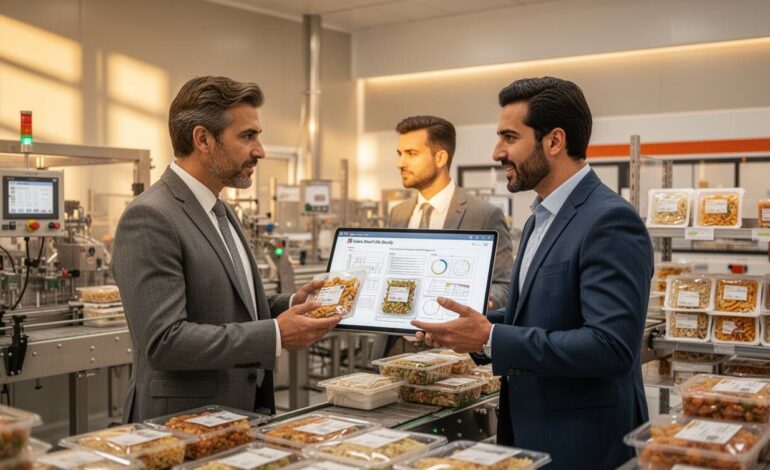
Smart Packaging and Shelf Life: The Hidden Edge for UAE Food Businesses
Your product sits on a Dubai supermarket shelf under blazing fluorescent lights. The temperature outside hits 48 degrees Celsius. Within weeks, what promised a six-month shelf life crumbles into discoloration, rancidity, and customer complaints. This scenario plays out daily across the UAE food and beverage industry, and the culprit isn’t always the product itself – it’s the packaging working against you. Smart packaging combined with rigorous shelf life testing isn’t just compliance theater; it’s the difference between a thriving food business and one that hemorrhages margin through waste and returns.
Why Packaging and Shelf Life Matter More in the Gulf
The Gulf presents a unique challenge that mainland suppliers rarely face. A product that lasts 12 months in a temperate climate might only last 6 months in the high humidity and heat of the Gulf region.[1] This isn’t exaggeration – it’s physics meeting commerce in an unforgiving climate. For restaurant consulting professionals and food factory design consultants working across the region, understanding this dynamic is foundational to building sustainable food brands that actually deliver on their promises.
The food safety standards in the UAE are stringent, and rightfully so. The regulatory framework demands that food products maintain their integrity – microbiologically, chemically, and organically – throughout their stated shelf life.[2] This means your packaging isn’t just a wrapper; it’s a protective barrier that must perform under extreme conditions while remaining cost-effective.
The Science Behind Shelf Life Testing in the UAE
Shelf life testing measures how long a product stays safe, looks good, and tastes right under specific storage conditions.[1] It’s a scientific stress test that goes far beyond gut feeling or industry assumptions. For food business experts and food processing consultants, this is where data replaces guesswork.
In the UAE, testing typically occurs across six standard conditions to simulate real-world scenarios your products will face.[1] These conditions aren’t arbitrary – they reflect actual storage temperatures, humidity levels, light exposure, and transportation stresses that products encounter between factory and consumer. The process evaluates factors like microbial growth, chemical changes, and spoilage to identify the exact point at which a food product may become unsafe for consumption.[2]
Accelerated shelf-life testing offers a practical advantage for food technology innovation. Instead of waiting 12 months for real-time results, accelerated testing can provide a six-month prediction in about 6 to 8 weeks.[1] This speed matters when you’re launching new products in competitive markets or adjusting formulations based on market feedback.
Packaging Materials: Your First Line of Defense
The choice of packaging material directly impacts shelf life outcomes. Glass, plastic, aluminum, and composite materials each behave differently under Gulf conditions. High humidity can compromise paper-based packaging. Certain plastics degrade faster under intense UV exposure. Metal containers may experience internal corrosion if moisture penetration occurs.[4] Food factory design consultants and food consultancy service providers must evaluate these factors during product development phases, not after launch.
Beyond basic material selection, innovative packaging technologies are reshaping the landscape. Modified atmosphere packaging (MAP) alters the oxygen and carbon dioxide levels inside containers to slow microbial growth and oxidation. Intelligent packaging – including absorbing materials, UV filters, and moisture barriers – provides additional protection layers.[4] For cloud kitchen business operators managing multiple SKUs with tight margins, these technologies can be the difference between profitability and product waste.
The regulatory framework in the UAE requires that products display shelf life information in specific formats. Products with shelf life of three months or less must show day/month/year, while longer shelf-life products can display month/year, with the last day of the month considered the expiry date.[3] This compliance requirement reinforces why accurate shelf life determination isn’t optional – it’s legally mandated and directly affects your labeling strategy.
Building Shelf Life Studies Into Your Product Development
Food business growth in the UAE increasingly depends on having credible shelf life data before products hit the market. The typical shelf life study takes between 1 to 4 weeks to complete, depending on product complexity, though some products require longer testing periods.[2] This timeline should be factored into your product launch planning from day one.
The study doesn’t truly end once your product reaches the store. Periodic revalidation is essential, particularly when you modify packaging materials, swap preservatives for natural alternatives, or change manufacturing processes. This isn’t bureaucratic overhead – it’s protecting your brand reputation and consumer safety simultaneously. qsr consultants and restaurant setup consultants helping operators scale their menus should ensure shelf life studies accompany any menu expansion or product reformulation.
Microbial testing forms a critical component of any comprehensive shelf life study. This analysis identifies potential contamination and growth of harmful microorganisms such as bacteria, fungi, and viruses, assessing both safety and quality maintenance throughout the product’s intended shelf life.[2] For food and beverage industry stakeholders, this data becomes your insurance policy against foodborne illness incidents that can destroy brand equity overnight.
Practical Recommendations for UAE Food Business Operators
- Commission shelf life studies early in product development, treating them as a foundational investment rather than a post-launch compliance task. Work with ISO-accredited testing facilities that understand Gulf-specific conditions and can provide both real-time and accelerated testing protocols to validate your Best Before and Use By dates with confidence.
- Conduct a packaging audit specifically for Gulf conditions – evaluate material degradation, moisture ingress, and light penetration under realistic warehouse and retail storage scenarios. Engage food consultancy service providers who can recommend material upgrades or innovative protective technologies without compromising cost structures.
- Establish a revalidation schedule whenever product formulations or packaging specifications change. Document these studies meticulously for regulatory compliance and maintain them as evidence of your commitment to food safety standards in the marketplace.
Food Technology and Sustainable Innovation
The intersection of food technology and packaging is driving meaningful change in how brands approach shelf life challenges. Blockchain-based supply chain tracking now allows real-time monitoring of product temperature and humidity throughout distribution networks. IoT sensors embedded in packaging can signal degradation before visible changes occur. For sustainable food brands building premium positioning, these technologies become competitive differentiators that justify price premiums to quality-conscious consumers.[5]
The food industry trends increasingly emphasize circular economy principles. Packaging decisions that extend shelf life also reduce waste – a sustainability win that resonates with both regulatory authorities and environmentally conscious consumers. Food processing consultants working with manufacturers can now design systems where optimized packaging and shelf life become dual sustainability levers rather than competing priorities.
Frequently Asked Questions (FAQs)
How much does a comprehensive shelf life study cost in the UAE, and is it worth the investment?
Shelf life studies typically cost between AED 5,000 to AED 25,000 depending on product complexity and testing scope. For any food business expecting products to remain on shelves for more than a few weeks, this investment is non-negotiable. A single product recall from shelf life inaccuracy costs exponentially more in brand damage, regulatory fines, and lost customer trust. Consider it insurance – expensive upfront but catastrophic when absent.
Can I extend my shelf life beyond GSO standards if I have scientific data to support it?
Yes, regulatory authorities in the GCC region may accept longer shelf-life periods if scientifically proven to be appropriate and safe for your specific product.[5] This opens opportunities for manufacturers to gain competitive advantage through superior packaging or formulation science. However, you must present thorough research and analysis to relevant national authorities – casual claims won’t suffice. Work with food processing plant consultancy services experienced in navigating these regulatory nuances.
What’s the difference between real-time and accelerated shelf life testing?
Real-time testing stores products under actual conditions and monitors them for their full intended shelf life – accurate but slow. Accelerated testing simulates stress conditions (higher temperatures, humidity, and light) to compress results into weeks rather than months.[1] Most producers use both approaches: accelerated testing for initial validation and real-time monitoring for regulatory submission. The choice depends on your timeline and risk tolerance.
How frequently should I revalidate my shelf life studies?
Revalidation becomes essential whenever you change packaging materials, modify formulations, switch suppliers, or adjust preservative systems. Additionally, periodic revalidation every 2-3 years even without changes ensures your assumptions remain valid as manufacturing processes and supply chains evolve. This is standard practice among professional food product development consultants managing established brands.
Moving Forward: Packaging and Shelf Life as Competitive Strategy
In the UAE’s dynamic food and beverage industry, packaging and shelf life aren’t just technical requirements – they’re strategic business tools. Brands that master this intersection reduce waste, improve profitability, satisfy regulatory requirements, and build consumer trust simultaneously. Whether you’re a turnkey food factory consultant designing facilities from scratch or a food business consultant optimizing existing operations, understanding how packaging protects shelf life stability should be central to your strategy.
The market increasingly rewards transparency and scientific rigor. Consumers want to know their products are safe and fresh. Regulators demand proof of safety. Retailers expect reliable shelf life data to manage inventory effectively. By investing in proper shelf life studies and intelligent packaging solutions, you satisfy all these stakeholders while creating a more resilient, profitable business.
Ready to transform your product shelf life strategy from a compliance checkbox into a competitive advantage? Connect with Tech4Serve to access expert guidance on packaging optimization, shelf life testing protocols, and sustainable food brand development tailored specifically for UAE and GCC market conditions. The right partnership today prevents costly problems tomorrow.