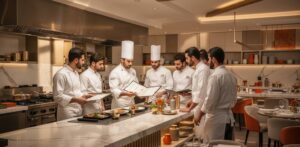
Kitchen Capacity, Scale, and Planning: The Backbone of UAE Food Ventures
Imagine a bustling cloud kitchen business in Dubai churning out 500 orders daily, only to hit a wall because its kitchen capacity couldn’t keep pace with surging demand. This scenario plays out too often in the UAE’s dynamic food and beverage industry, where poor planning stifles food business growth. Get kitchen capacity, scale, and planning right from the start, and you unlock sustainable operations that thrive amid food industry trends like delivery booms and menu diversification.
Why Kitchen Capacity and Scale Define Success in UAE Restaurants
In the UAE, where real estate premiums and consumer expectations soar, mismatched kitchen capacity leads to chaos. A kitchen scaled too small bottlenecks service during peak hours, while overbuilt setups drain capital on unused space. Effective planning aligns your kitchen’s output potential with projected volumes, ensuring smooth workflow and food safety compliance from day one.
Recent data underscores the stakes: the UAE food and beverage sector grew by 7.5% in 2024, driven by tourism recovery and cloud kitchen expansion, according to a FoodNavigator report. Yet, 40% of new F&B outlets face delays due to capacity miscalculations, per Dubai Municipality insights. Forward-thinking operators turn to restaurant consulting to map kitchen capacity against sales forecasts, avoiding these pitfalls.
Assessing Your Kitchen Capacity Needs: A Step-by-Step UAE Guide
Start with volume projections. For a mid-sized Sharjah cafe, estimate daily covers at 150, factoring in 20% growth from food industry trends like health-focused menus. Calculate peak-hour demands: if lunch rushes 80 orders, your kitchen capacity must handle 4-5 per chef without overlap.
Next, factor in menu complexity. High-end dishes demand more prep space than QSR staples. Food technology like combi-ovens boosts capacity by 30% in compact setups, ideal for scale in tight Dubai spaces. Engage food business consultants early to run simulations, ensuring your layout supports food business growth without compromising food safety.
Key Metrics for Measuring Kitchen Capacity
- Output per Hour: Aim for 50-100 plates in standard restaurants; cloud kitchens target 200+ for delivery scale.
- Square Footage per Seat: Allocate 10-15 sqm per dine-in seat, halved for cloud operations.
- Equipment Throughput: Ovens handling 20 trays/hour enable rapid scale during festivals like Ramadan.
Strategic Planning for Scalable Kitchens in the UAE F&B Scene
Planning isn’t a one-off; it’s iterative. A Mumbai-born entrepreneur launching a sustainable food brands chain in Abu Dhabi learned this when initial plans ignored ventilation scale, failing Civil Defense checks. restaurant setup consultants helped redesign for modular expansion, turning setback into swift approvals.
Incorporate zone-based layouts: separate prep, cooking, plating, and wash areas to optimize flow. For cloud kitchen business, prioritize delivery packaging zones. food factory design consultants recommend vertical storage to double capacity in high-rent areas, blending efficiency with UAE’s strict hygiene rules.
“Scalable kitchen planning is the silent engine of restaurant success – it anticipates growth before demand arrives,” notes F&B expert Khalid Al-Mansoori in an EIT Food report on Middle East trends. This mindset separates thriving outlets from strugglers.
Scaling Kitchens Amid UAE Food Industry Trends
UAE’s food and beverage industry pulses with shifts like plant-based surges and ghost kitchen rises. A 2025 IFT survey predicts 25% of F&B revenue from delivery, demanding kitchens scaled for off-peak prep bursts. food processing consultants advise hybrid equipment – think under-counter chillers – to flex capacity without expansion costs.
Consider a Ras Al Khaimah QSR chain: initial 100 sqm kitchen scaled via leased combi-ovens to handle franchise growth, hitting 300 daily orders. qsr consultants emphasize electrical load planning for future tech like AI inventory systems, future-proofing against food technology advances.
Actionable Recommendations for Kitchen Scale and Planning
- Conduct a six-month traffic audit using POS data to baseline capacity, then add 25% buffer for seasonal spikes like Eid.
- Partner with Turnkey Food Factory Consultant for CAD layouts that comply with Abu Dhabi Agriculture and Food Safety Authority standards.
- Invest in modular racking; it allows 40% more storage, easing scale as your menu evolves with sustainable food brands demands.
Integrating Food Safety and Efficiency in Capacity Planning
Food safety isn’t optional in UAE kitchens. Dubai Municipality mandates grease traps and zoned sanitation, directly impacting capacity. Poor planning here slashes output by 15-20% due to cross-contamination risks. Food Consultant Services streamline this with HACCP-aligned designs, boosting throughput while meeting regs.
For cloud kitchen business, compact footprints demand smart scale: stackable refrigeration preserves food safety without floor space eat-up. A Bakery Consultants project in Ajman scaled from 50 to 200 loaves daily via ventilated zoning, exemplifying compliant growth.
Budgeting for Kitchen Capacity Expansion
Costs scale predictably: small cloud setups run AED 100,000-200,000, mid-tier restaurants AED 300,000+. Allocate 20% for scalability features like extra power outlets. Food Processing Plant Consultancy Services help optimize, often saving 15% via bulk procurement.
Leasing via cafe consultant networks tests scale without capex risks, vital for food business growth in volatile markets. Track ROI: efficient planning yields 20% faster service, per UAE F&B benchmarks.
Frequently Asked Questions (FAQs)
How do I calculate kitchen capacity for a new cloud kitchen business in Dubai?
Begin by projecting daily orders based on location and marketing – say 300 for a central spot. Divide by operational hours and staff efficiency, aiming for 20-30 orders per hour per station. Factor in prep time per menu item and add 30% buffer for peaks; tools from food consulting firms like Tech4Serve can model this precisely for UAE compliance.
What role does food technology play in scaling restaurant kitchens?
Food technology like automated prep stations and IoT refrigeration cuts waste by 25% and boosts capacity without added staff. In UAE’s heat, smart systems monitor temps for food safety, enabling 24/7 cloud operations. Integrate via food product development consultants to align with your growth trajectory seamlessly.
How can sustainable food brands plan for kitchen scale?
Sustainable food brands prioritize energy-efficient gear like induction cooktops, which scale output while slashing utilities 20%. Plan modular zones for seasonal plant-based lines, consulting food and beverages consultants to balance eco-goals with capacity needs in UAE’s green F&B push.
Conclusion: Scale Smart, Grow Strong in UAE F&B
Mastering kitchen capacity, scale, and planning positions your venture for enduring success in the UAE’s competitive food and beverage industry. From cloud kitchens to fine-dining halls, intentional design fuels food business growth amid evolving food industry trends. Ready to optimize? Connect with Tech4Serve for expert restaurant consulting tailored to your vision.