Restaurant Operations: The Engine Behind Every Successful Dining Business
Running a restaurant is like conducting an orchestra – every section must perform perfectly in sync, or the entire experience falls apart. Whether you’re managing a quick-service restaurant, a fine dining establishment, or a cloud kitchen business, operational excellence determines whether your business thrives or merely survives. In 2026, the food and beverage industry is undergoing rapid transformation, driven by technology, shifting consumer expectations, and operational complexities that would have seemed impossible a decade ago.
Understanding the Core of Restaurant Operations
Restaurant operations encompass everything from inventory management and staff scheduling to food safety compliance and customer service delivery. The foundation of any successful foodservice operation rests on three pillars: efficient processes, skilled staff, and continuous improvement. According to recent industry data, restaurants that implement structured operational frameworks see a 23% increase in profitability within the first year compared to those operating without documented systems. This isn’t coincidence – it’s the result of deliberate, systematic management.
Think of a cloud kitchen business operator in Dubai who recently scaled from one location to three. Their success didn’t come from having more capital or better marketing. Instead, they standardized every operational process – from how ingredients are received and stored to how each dish is prepared and delivered. The food business growth they achieved was directly proportional to how tightly they controlled their operations.
The Restaurant Consulting Advantage in Modern Operations
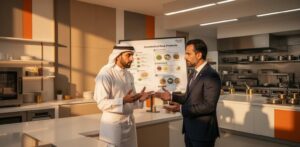
Many restaurant owners underestimate the value of professional guidance when it comes to operational optimization. Restaurant consulting services have evolved significantly, with experts now focusing not just on menu design but on comprehensive operational audits. Food Business Experts can identify inefficiencies that drain your margins before you even realize they exist. A QSR consultant might discover that your kitchen layout is causing 15-minute delays during peak hours, or that your food storage systems are compromising food safety protocols.
The modern food and beverages consultant brings data-driven insights that transform gut feelings into strategic decisions. When you’re choosing between investing in a new POS system or restructuring your kitchen workflow, these professionals help you understand the real return on investment.
Food Safety and Operational Compliance in the UAE
Operating in the UAE means navigating one of the world’s strictest regulatory environments for the food and beverage industry. Dubai Municipality requires comprehensive documentation, regular inspections, and demonstrated compliance with HACCP protocols. Food safety isn’t optional – it’s foundational to your operational license.
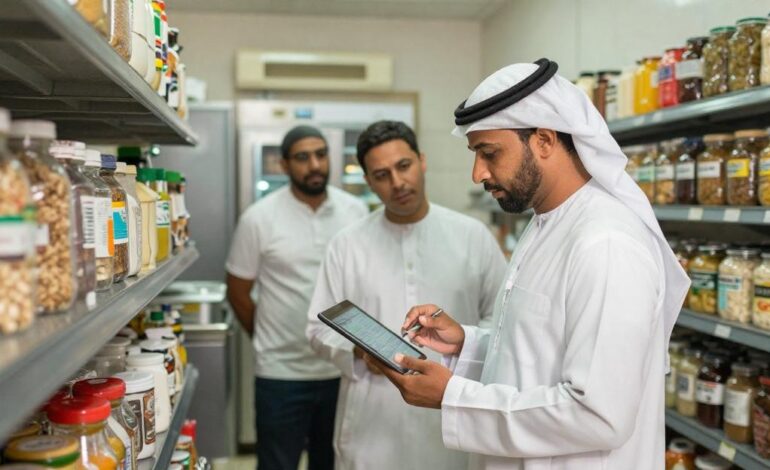
A food consultant services provider will help you establish systems that make compliance automatic rather than stressful. This includes temperature monitoring for stored ingredients, proper staff training on hygiene protocols, and documentation systems that prove your adherence to standards. The cost of preventing a single food safety incident far outweighs the investment in robust operational systems.
According to FoodNavigator research, 67% of food safety incidents in quick-service restaurants stem from operational failures rather than ingredient quality. This statistic should concern every restaurant and cafe owner: your systems matter more than you think.
Technology’s Role in Streamlining Restaurant Operations
food technology has revolutionized how restaurants manage their daily operations. Modern restaurant management systems integrate point-of-sale data, inventory tracking, and staff scheduling into unified platforms. Cloud kitchen business operators especially rely on these systems to manage multiple order streams from various delivery platforms while maintaining consistency.
A Food Processing Plant Consultant will tell you that the same technology principles that optimize factory operations apply to restaurants. Just as manufacturing benefits from real-time production monitoring, your dine-in service benefits from kitchen display systems that show orders in real time, reduce mistakes, and speed up service. The integration of food technology into daily operations has become non-negotiable for competitive restaurants in 2026.
The sustainability angle is equally important. Sustainable food brands increasingly use operational data to reduce waste. By tracking ingredient usage patterns, restaurants can optimize purchasing, reduce spoilage, and lower costs while improving their environmental footprint. This represents a convergence of operational efficiency and brand values.
Staffing and Training: The Human Element of Operations
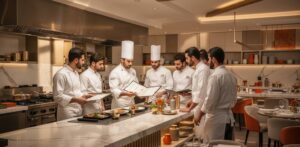
Technology handles many tasks, but your team executes your operational vision daily. A Food and Beverages Consultant will emphasize that staff training directly impacts operational outcomes. When team members understand not just what to do, but why procedures exist, they become your operational partners rather than task executors.
Consider a real scenario: a cafe consultant working with a struggling specialty coffee shop discovered that baristas weren’t following the documented milk-steaming protocol. Not because they didn’t know it, but because they didn’t understand how improper technique affected consistency and customer satisfaction. Once training reframed procedures as quality guarantees rather than rules, compliance improved naturally.
Your restaurant operations depend on people who:
- Understand food safety implications of their daily tasks
- Can problem-solve when deviations occur
- Take ownership of service quality
- Maintain consistency across shifts
- Communicate effectively with management
Data-Driven Decision Making in Daily Operations
Modern restaurant operations generate enormous amounts of data – transaction records, ingredient usage, customer traffic patterns, and staff performance metrics. The difference between successful restaurants and struggling ones often comes down to who actually uses this data versus who ignores it.
A turnkey food factory consultant working with a UAE-based QSR discovered that peak service hours differed by 45 minutes between weekday and weekend operations. This simple insight allowed them to adjust staff scheduling, reducing labor costs while improving service speed. Without data analysis, they would have continued scheduling based on assumptions.
Ask yourself these questions about your current operations:
- Do you know which menu items drive profitability versus which are just popular?
- Can you identify when and why operational costs spike?
- Do you track service speed metrics to identify bottlenecks?
- Are you measuring customer satisfaction with operational metrics?
Scalability: Building Operations That Grow With Your Business
When a cafe owner decides to open a second location or a cloud kitchen operator expands to multiple kitchens, operational systems either support growth or become the limiting factor. A food industry consultant specializing in scaling operations focuses on documenting procedures so thoroughly that they can be replicated exactly at new locations.
This is where restaurant setup consultants earn their value. They design operations with growth in mind, implementing systems flexible enough to handle one location or ten. The difference between a restaurant that scales successfully and one that collapses under expansion often comes down to operational planning.
Food business growth requires that you can train new staff quickly, maintain quality consistency, and manage finances across multiple units. Without scalable operations, growth becomes chaos.
Sustainability and Operational Efficiency
Sustainable food brands increasingly recognize that operational efficiency and environmental responsibility are interconnected. Reducing waste through better inventory management, minimizing energy consumption in kitchens, and optimizing delivery routes aren’t just good for the planet – they improve your bottom line.
A Food Consultants firm working with environmentally conscious restaurant owners found that implementing precise portion control systems reduced food waste by 28% while improving portion consistency. The operational improvement also improved customer satisfaction because dishes became more reliable.
Challenges Every Restaurant Operator Faces
Even well-managed restaurants encounter operational challenges. Rising food and energy costs squeeze margins. Labor shortages make consistent staffing difficult. Supply chain disruptions require flexibility. Customer expectations continue rising while patience diminishes. These aren’t unique to your restaurant – they’re industry-wide realities.
What distinguishes successful operators is how they respond. They invest in operational resilience: diversified suppliers, cross-trained staff, flexible systems, and contingency planning. A Food Consultancy Service provider helps identify where your operations are vulnerable and develops strategies to strengthen them.
Frequently Asked Questions (FAQs)
How often should I review and update my restaurant operations procedures?
Ideally, you should conduct a comprehensive operational review every quarter, with monthly spot-checks on critical processes. However, the frequency depends on your situation – a new restaurant might need monthly reviews as you refine systems, while an established restaurant with stable operations might move to semi-annual reviews. The key is that review should be regular and documented. Think of it like vehicle maintenance: some checks happen daily, others monthly, and some annually. When you identify issues or implement new technology, procedures need updating immediately. A food processing plant consultancy Services provider can help establish a review schedule tailored to your restaurant’s specific needs and growth stage.
What’s the biggest operational mistake restaurant owners make in the UAE?
The biggest mistake is underestimating the importance of documentation and compliance systems. Many restaurant owners focus entirely on food quality and customer service – which are important – but neglect the operational frameworks that make consistency possible. In the UAE’s regulated environment, this becomes critical quickly. The second major mistake is not investing in staff training early enough. Owners think they’ll train thoroughly after reaching a certain size, then wonder why their kitchen makes repeated mistakes. A QSR Consultant will tell you that training investment pays dividends immediately through reduced waste, faster service, and better food safety. Starting these practices small is easier than trying to establish them when you’re overwhelmed with growth.
Can a small restaurant really benefit from operational consulting?
Absolutely, and sometimes a small restaurant benefits more than a large one. A small restaurant has higher stakes for each operational failure – losing a few customers represents a larger percentage of revenue. A Cafe Consultant can help a solo proprietor establish systems that would normally require larger management teams. The consultant essentially becomes your operational advisor, helping you see inefficiencies you’re too close to notice and implement improvements without requiring additional staff. Many restaurant consultants offer tiered services specifically for smaller operations, recognizing that scaling efficiency starts at any size.
How does food technology integration typically impact restaurant operations?
Technology integration usually improves efficiency, accuracy, and decision-making, but implementation matters greatly. A well-chosen system integrated thoughtfully can reduce errors by 40-50%, improve staff efficiency by 20-30%, and provide data insights that drive profitability. However, poorly chosen technology or inadequate training can actually decrease efficiency initially. The food business consultants recommend selecting systems specifically designed for your restaurant type and ensuring comprehensive staff training before going live. Phased implementation – perhaps starting with POS and inventory before adding kitchen display systems – often works better than trying to implement everything simultaneously.
Conclusion: Your Operational Excellence Roadmap
Restaurant operations in 2026 demand more sophistication than ever before. The intersection of regulatory requirements, technology capabilities, customer expectations, and competitive pressures creates a complex landscape. Yet within this complexity lies opportunity: restaurants that master operational excellence create competitive advantages that are difficult for competitors to copy.
Your path forward involves honest assessment of current operations, identification of critical gaps, systematic improvement, and continuous monitoring. Whether you manage a single cafe or multiple cloud kitchen locations, whether you’re focused on sustainable food brands or maximizing QSR efficiency, the principles remain constant: document your processes, train your team thoroughly, use data to guide decisions, and invest in systems that scale.
The restaurants and food businesses that will thrive in 2026 and beyond won’t necessarily be the ones with the trendiest menus or the highest prices. They’ll be the ones with operational systems so effective that customers experience consistency, quality, and value every single visit. That’s the operational advantage worth building.
Ready to transform your restaurant operations? Connect with Tech4Serve to explore how structured operational systems can unlock your business potential and position your restaurant for sustainable growth in the competitive UAE market.