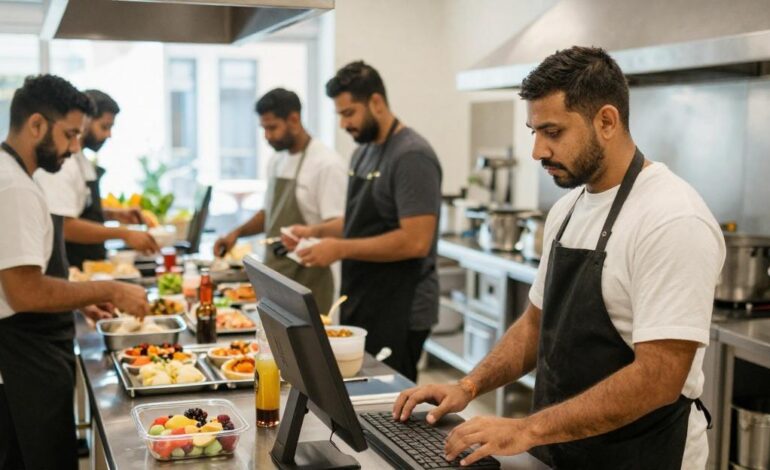
Understanding Cloud Kitchen Models: The Future of Food Delivery in UAE
The food delivery landscape in the UAE has undergone a seismic shift, and cloud kitchens are no longer an experimental concept – they are the backbone of modern food entrepreneurship. Whether you are launching your first food business or scaling an existing operation, understanding the various cloud kitchen models available is essential to making informed decisions that directly impact your bottom line and market position.
What Are Cloud Kitchen Models and Why They Matter
A cloud kitchen, also known as a ghost kitchen or virtual restaurant, is a delivery-only food preparation facility designed exclusively for fulfilling online orders across platforms like Deliveroo, Talabat, and Careem. Unlike traditional restaurants, cloud kitchens eliminate the overhead of front-of-house operations, allowing entrepreneurs to focus entirely on kitchen efficiency, food quality, and customer satisfaction through delivery channels.
The distinction is critical for understanding modern food industry trends. According to recent market data, the cloud kitchen foodservice market is poised for strong growth as the food-service industry shifts increasingly toward delivery-centric models. The UAE, particularly Dubai and Abu Dhabi, has become a global leader in cloud kitchen adoption, with over 200 cloud kitchen facilities operating across the emirates, serving as centralized hubs for multiple virtual brands and delivery-only food operations.
Design matters enormously in this context. A well-designed cloud kitchen impacts workflow efficiency, food safety and hygiene, staff productivity, and operational scalability – all factors that determine whether your food business growth trajectory points upward or stagnates.
The Multi-Brand Cloud Kitchen Model: Maximum Profitability Through Flexibility
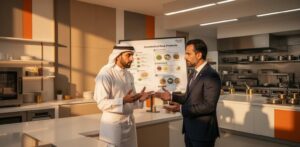
One of the most transformative shifts in the food and beverage industry is the emergence of the multi-brand cloud kitchen model. This approach allows a single kitchen facility to operate three, four, or even more distinct food brands simultaneously, each with separate cooking lines but unified logistics and technology infrastructure.
Imagine a scenario where you operate a cloud kitchen housing a biryani brand, a shawarma concept, and a dessert delivery service – all under one roof, sharing dispatch infrastructure but maintaining completely separate brand identities to customers. This is not speculation; it is happening across Dubai and Abu Dhabi today. The multi-brand model works because it offers entrepreneurs the ability to test different cuisines, target varied customer segments, and diversify revenue streams without the exponential cost increases that would accompany opening separate facilities.
Food Business Experts emphasize that this model requires meticulous operational planning. Separate prep zones for each brand prevent cross-contamination and maintain culinary integrity, while shared packing and dispatch areas reduce overhead significantly. Unified tech systems manage orders efficiently across all brands from a single dashboard, streamlining what could otherwise become an administrative nightmare.
Single-Brand vs. Aggregator Models: Choosing Your Path
Not every entrepreneur needs a multi-brand setup. The single-brand dedicated cloud kitchen model remains incredibly viable, particularly for founders with a strong, differentiated concept that demands complete operational focus. This model concentrates all resources on perfecting one cuisine, building brand loyalty, and dominating a specific market segment.
Alternatively, the aggregator model involves partnering with established cloud kitchen networks like Deliveroo Editions or The Cloud platform. These platforms provide pre-built kitchen infrastructure, handle technology integration, and manage delivery partnerships – essentially offering a turnkey food factory consultant approach to food entrepreneurship. You bring the culinary expertise and brand vision; they handle the operational backbone.
Starting a cloud kitchen in Dubai through this route typically costs between AED 30,000 to AED 80,000, depending on kitchen size, location, licensing, equipment, and facility type. Shared cloud kitchen spaces significantly reduce setup costs compared to private facilities, making this pathway particularly attractive for first-time entrepreneurs testing food business concepts.
Technology-Driven Design: The 2026 Competitive Advantage
The intersection of food technology and cloud kitchen design has become inseparable. Modern cloud kitchens integrate AI-driven inventory systems that predict peak hours and optimize staffing, automated cooking equipment that reduces manual effort while improving consistency, and IoT sensors that monitor temperature, humidity, and hygiene compliance in real-time.
This is not futuristic thinking – it is operational reality in progressive UAE food establishments. food business consultants working with forward-thinking operators report that kitchens alerting managers before stock runs out or adjusting cooking times automatically for peak orders generate measurable improvements in waste reduction and customer satisfaction metrics. restaurant setup consultants consistently recommend these investments because the ROI materializes within 12-18 months through improved efficiency and reduced labor costs.
food factory design consultants emphasize that technology integration should prioritize modular, scalable solutions. Pre-wired infrastructure for additional appliances, convertible prep and cooking zones, and expandable storage solutions ensure your cloud kitchen grows without requiring expensive renovations as your food business growth accelerates.
The Sustainability Factor in Modern Cloud Kitchen Models
Sustainable food brands are not a niche concern in 2026 – they represent mainstream consumer expectation. Cloud kitchens, by their very nature, are more environmentally efficient than traditional restaurants. They eliminate wasteful front-of-house operations, optimize delivery consolidation, and enable precise inventory management that dramatically reduces food waste.
Smart ventilation systems, energy-efficient cooking equipment, and hygienic surfaces designed for easy cleaning align cloud kitchen operations with food safety protocols while simultaneously reducing environmental impact. Food Safety standards become easier to maintain and audit when operations are designed with sustainability principles embedded from inception.
This convergence of sustainability and operational efficiency appeals to modern delivery customers who increasingly make purchasing decisions based on brand values. A cloud kitchen demonstrating genuine food safety practices and environmental responsibility gains competitive differentiation that translates into higher order volumes and customer retention.
Regulatory Framework and Legal Considerations in UAE
Cloud kitchens are fully legal in the UAE, but this legitimacy comes with specific compliance requirements. Entrepreneurs must obtain a proper trade license from the Department of Economic Development (DED) or a free zone authority, along with food safety and hygiene approvals from Dubai Municipality or the relevant local authority.
food consultant services emphasize that navigating this regulatory landscape requires clarity. The food safety requirements mirror those of traditional restaurants – HACCP guidelines must be followed, advanced ventilation systems implemented, and hygiene-focused workflows maintained throughout operations. Food consultancy service providers often guide first-time cloud kitchen entrepreneurs through this process, ensuring compliance from day one rather than discovering gaps that require costly remediation later.
Practical Implementation: Three Actionable Recommendations
Based on current food industry trends and successful operations across the UAE, consider these concrete steps:
- Conduct a thorough location and facility audit before committing capital. Work with food industry consultant partners to evaluate foot traffic patterns for delivery pickup, proximity to delivery partner hubs, and existing cloud kitchen density in your target area. High competition can either indicate opportunity or market saturation – context matters enormously.
- Invest in robust point-of-sale and inventory management systems from inception. Technology integration should address order routing across delivery platforms, real-time inventory visibility, and automated reordering triggers. food processing consultants consistently report that kitchens failing at this stage typically struggle with waste management and stockout incidents.
- Design workflows that enable rapid scaling without proportional cost increases. Modular kitchen layouts, standardized recipes that permit batch cooking, and cross-trained staff capable of managing multiple brand lines ensure that when demand spikes – which it will during promotions or seasonal peaks – your operation scales gracefully rather than buckling under pressure.
Real-World Success: The Multi-Brand Operator’s Perspective
Consider the case of a Dubai-based entrepreneur who launched a single shawarma brand through a cloud kitchen three years ago. After eighteen months of proving concept-market fit and building operational efficiency, she expanded into a multi-brand model, adding a biryani concept and casual Indian street food line. Revenue didn’t simply increase proportionally – it tripled within the second year because the same operational infrastructure now served three distinct customer bases, each with different ordering patterns and price points.
This is the power of understanding cloud kitchen models deeply. She did not need three separate facilities, three separate management teams, or three separate technology stacks. She optimized a single infrastructure to generate three revenue streams, which is the essence of why cloud kitchens have become the preferred pathway for scaling food business growth in the UAE.
Industry Perspective on Cloud Kitchen Evolution
Leading research indicates that cloud kitchens represent more than a temporary trend – they signal a fundamental restructuring of the food-service industry. As one analysis notes, cloud kitchens demonstrate clear advantages in business model agility and cost-efficiency, attributes that increasingly matter in competitive markets.
Global consulting firms including Deloitte now position cloud kitchens as the future of food business models, recognizing that delivery-only operations reduce capital intensity while maintaining quality and customer satisfaction. This perspective is reshaping how investors evaluate food entrepreneurship opportunities and how experienced restaurateurs consider expansion strategies.
Frequently Asked Questions (FAQs)
What is the typical startup cost for a cloud kitchen in Dubai, and what factors influence pricing?
Starting a cloud kitchen in Dubai typically ranges from AED 30,000 to AED 80,000, with variation driven by several critical factors. Shared kitchen spaces cost significantly less than private facilities because you avoid build-out expenses and long-term lease commitments. Kitchen size directly impacts costs – a 500-square-meter operation designed to run two brands costs less than a 1,500-square-meter space intended for five brands. Equipment selection matters considerably; basic cooking setups differ dramatically in price from fully automated, AI-integrated systems. Location also plays a decisive role – a cloud kitchen in a premium business park costs more than one in an emerging industrial area. Finally, licensing and food safety compliance costs vary by emirate. Most entrepreneurs underestimate these regulatory expenses, so allocating 10-15 percent of your total budget to compliance and certification is prudent planning.
Can I operate multiple brands from a single cloud kitchen without legal complications?
Yes, absolutely, and this is now standard practice across the UAE. The multi-brand cloud kitchen model is legally recognized and increasingly common. However, specific operational requirements apply. Each brand must have clearly segregated prep areas to prevent cross-contamination and maintain food safety integrity. You need separate inventory tracking systems for each brand to ensure accurate costing and compliance reporting. Delivery platform registrations may require separate accounts for each brand, though most modern platforms support multi-brand management through unified dashboards. The critical legal requirement is that your trade license and food safety certification explicitly authorize multi-brand operations – you cannot simply assume this is permitted. Consult with your Department of Economic Development representative or a restaurant consultant before launching multiple brands to ensure your license covers all planned concepts. This preventive approach avoids discovering compliance gaps after you have already invested significantly.
How does cloud kitchen design impact profitability, and what design elements should I prioritize?
Cloud kitchen design directly influences profitability through three primary mechanisms. First, workflow efficiency determines labor costs and order fulfillment speed – a poorly designed kitchen wastes staff time and slows delivery, both of which erode margins. Second, food safety and hygiene compliance prevent costly violations, operational shutdowns, and reputational damage. Third, scalability determines whether you can increase order volume without proportional cost increases. Design elements worth prioritizing include zoned workflows that segregate prep, cooking, and packing areas to reduce congestion and improve efficiency. Vertical storage solutions and modular design allow you to reconfigure spaces as your business evolves without expensive renovations. Smart ventilation systems reduce energy consumption while maintaining food safety standards. Flexible cooking lines designed for multiple cuisines enable the multi-brand model without physical separation. Modern cloud kitchen design also considers technology integration from inception – pre-wired infrastructure for IoT sensors, automated systems, and point-of-sale integration ensures you do not incur retrofit costs later. Finally, ensure your design permits future expansion; modular walls and convertible zones mean growth happens through configuration changes rather than relocation.
What regulatory approvals do I need before launching a cloud kitchen in the UAE?
Operating a cloud kitchen in the UAE requires multiple regulatory approvals, and the sequence matters. First, obtain a trade license from the Department of Economic Development (DED) if operating in Dubai or a free zone authority if in a designated free zone. This license must explicitly authorize food preparation and delivery activities. Second, secure food safety and hygiene approvals from Dubai Municipality (or the relevant emirate’s food authority) – this typically requires a facility inspection confirming compliance with HACCP guidelines, proper ventilation, sanitary surfaces, and food storage standards. Third, if you plan to handle specific food categories like meat or dairy, additional specialized certifications may apply. Fourth, register with your chosen delivery platforms – Deliveroo, Talabat, and Careem each have vendor onboarding processes. Finally, obtain business liability insurance and, if you employ staff, comply with labor department requirements. Most entrepreneurs underestimate the timeline for these approvals – budget 4-8 weeks from initial application to operational launch. Working with a restaurant consultant or Food Business Expert familiar with UAE regulations significantly accelerates this process and reduces the risk of overlooking critical requirements.
How do I choose between a dedicated single-brand cloud kitchen and a multi-brand aggregator model?
This decision depends on your culinary focus, capital availability, and growth aspirations. Choose a dedicated single-brand cloud kitchen if you have a distinctive, defensible concept that demands operational focus and brand consistency – think a specialized cuisine or a proprietary cooking method that cannot be easily replicated. Single-brand kitchens allow you to perfect execution, build strong brand identity, and dominate a specific market segment. Choose a multi-brand aggregator model or shared cloud kitchen facility if you want to test multiple concepts, diversify revenue streams, or minimize capital investment. Aggregator platforms handle technology, delivery partnerships, and often provide equipment – you simply provide culinary expertise. This works well if you are testing market fit for new cuisines or scaling rapidly across multiple concepts. A middle-ground hybrid approach also exists: start with a single brand in a shared facility, prove concept viability within 6-12 months, then either expand that brand within the shared space or graduate to a private multi-brand facility. This staged approach reduces early-stage risk while maintaining optionality as you learn market dynamics.
Conclusion: Your Cloud Kitchen Future Starts Now
Cloud kitchen models represent a genuine inflection point in food entrepreneurship. Whether you operate a single specialized concept or manage a portfolio of delivery-only brands, the pathway to food business growth in 2026 runs through cloud kitchens – not around them.
The models exist, the technology is mature, the regulatory framework is clear, and the market demand is undeniable. What separates successful cloud kitchen operators from those who struggle is not access to these advantages but rather the deliberate application of proven operational principles and strategic thinking about which model aligns with your specific goals and constraints.
Your next step is partnering with specialists who understand these models deeply. Tech4Serve brings together the technical infrastructure, consulting expertise, and industry connections necessary to launch and scale cloud kitchens that generate sustainable profitability. Whether you need food factory design consultants, ongoing operational support, or technology systems that integrate seamlessly with your delivery channels, Tech4Serve provides the partnership foundation that transforms cloud kitchen concepts into profitable, scalable operations. Connect with their team today and transform your food entrepreneurship vision into market reality.